
The 2025 Booker Prize shortlist has arrived, and it's a masterclass in literary ambition.
Six books. Six completely different reading experiences. And according to Roddy Doyle, chair of the judging panel, they all share one crucial quality: they're "brilliantly written and brilliantly human."
The Booker Prize judges read 153 books across two continents. They narrowed it down to 13. Then to six. What they chose is a shortlist that skews toward experienced authors—five of these writers have more than five books to their names. These are writers who've spent decades mastering their craft. And it shows.
But prestige doesn't always translate to pleasure. A Booker-winning book might be intellectually brilliant and emotionally draining. It might be innovative and difficult to read. It might be absolutely worth your time or completely wrong for where you are right now.
This guide breaks down all six shortlisted books so you can figure out which one is actually right for you.
The 2025 Booker Prize Shortlist: Six Books, Six Different Reads
1. Flashlight by Susan Choi
The premise: On a summer night in Japan, a 10-year-old girl named Louisa walks along a breakwater with her father, Serk. He carries a flashlight. He cannot swim. Hours later, Louisa is found on the beach, barely alive. Her father has vanished.
The book: Flashlight is a family epic that spans decades and continents, piecing together the mystery of Serk's disappearance. But it's also a multigenerational story about displacement, identity, and the things we can never fully know about the people we love. Serk himself was a Korean boy raised in Japan, then an American graduate student, then a husband and father living between cultures. The novel explores how historical trauma—specifically the North Korean mass abductions of South Koreans during and after the Korean War—shapes individual lives and family secrets.
The reading experience: This is the longest and most ambitious book on the list. It's carefully structured, moving between timelines and perspectives, but the pacing is deliberate rather than propulsive. The prose is precise and unemotional even when describing devastating events. This is a novel that asks you to sit with grief and mystery rather than resolve them neatly.
The judges loved: The scope. The way Choi gives her characters room to be fully human rather than just vessels for political themes. The exploration of what remains unsaid in families.
Best for this mood: If you want something gripping and intellectually engaging that also explores family history and identity. If you're comfortable with ambiguity and emotional complexity.
Should you read it? Only if you're ready for a substantial, demanding book. This isn't a page-turner. It's a book that makes you think, that lingers, that rewards careful reading. If you have the mental bandwidth, it's extraordinary. If you're exhausted, skip it for now.
2. The Loneliness of Sonia and Sunny by Kiran Desai
The premise: An Indian family—grandmother, mother, and two grown children living separate lives across the globe—are held together by love and exasperation. The novel weaves between their private worlds: a grandmother in India managing family expectations, a son in America grappling with his place in the world, a daughter with her own quiet struggles.
The book: This is Kiran Desai's follow-up to The Inheritance of Loss (which won the Booker Prize in 2006). It's a family saga in the best sense—intimate, multi-perspective, and deeply felt. The title promises loneliness, but the book is really about connection: how families stay linked across distances, how love persists despite misunderstanding, how we're never as alone as we think we are.
The reading experience: Warm, accessible, and character-driven. Desai's prose is beautiful but not baroque. The emotional core is clear. This is a book that respects readers' intelligence without punishing them for it. You'll recognize yourself and people you love in these characters.
The judges loved: The emotional truth. The way Desai captures family dynamics without sentimentality. The exploration of what it means to be connected across continents.
Best for this mood: If you want literary fiction that also feels like coming home. If family stories matter to you. If you want to feel something without being emotionally devastated.
Should you read it? Yes, unless you actively hate multi-generational family sagas. This is the most immediately pleasurable book on the list. It's also the most likely to make you think about your own family.
3. Audition by Katie Kitamura
The premise: An unnamed narrator attends the audition of an actor she knows. What should be a casual afternoon becomes the launching point for a meditation on attention, performance, desire, and what it means to watch someone perform their identity.
The book: Audition is a slim, intense psychological study. It's experimental but not impenetrable. Kitamura explores the nature of performance—how we present ourselves, how we read others, what it means to be seen. The book circles around questions of desire and fascination without resolving them. It's less plot-driven than mood-driven.
The reading experience: This is the shortest book on the list, but it's densely written and demands active reading. You're not supposed to fully understand the narrator's motivations. You're supposed to sit with the strangeness of human connection and observation.
The judges loved: The formal innovation. The way Kitamura makes a small moment—an audition—contain enormous psychological complexity.
Best for this mood: If you like literary fiction that experiments with form and structure. If you're interested in psychology and human behavior. If you want something intellectually challenging and strange.
Should you read it? Only if you're willing to work for your reading. This isn't a cozy evening read. It's a book that asks questions and doesn't provide answers. If that sounds exciting, read it. If that sounds frustrating, wait.
4. The Rest of Our Lives by Ben Markovits
The premise: A man and his former lover embark on a road trip. As they drive, the novel fragments into competing narratives and perspectives, questioning what actually happened between them and whether anyone's version of the past can ever be fully true.
The book: This is a novel about memory, desire, and the stories we tell ourselves about our relationships. Markovits uses the road trip structure to explore how two people can experience the same events completely differently. It's simultaneously about one relationship and about how all relationships are fundamentally private experiences that can never be fully shared.
The reading experience: Playful, clever, and genuinely surprising. The narrative structure shifts in ways that feel fresh and earned. There's humor alongside the melancholy. The writing is sharp and intelligent without being showy.
The judges loved: The formal inventiveness. The way Markovits plays with perspective and narrative unreliability. The way he makes a deeply personal story feel universal.
Best for this mood: If you like novels that play with structure. If you're interested in relationships and how memory shapes them. If you want something clever and emotionally resonant.
Should you read it? This is the book for readers who love smart literary fiction. It's not overly difficult, but it requires attention. It rewards close reading. It's one of the most purely enjoyable books on the list.
5. The Land in Winter by Andrew Miller
The premise: During a brutal winter, a man struggles to survive in rural England. The land itself becomes almost a character—harsh, unforgiving, beautiful in its extremity.
The book: This is historical fiction that reads almost like an adventure novel. Miller strips down the narrative to essentials: a man, the land, the need to survive. There's minimal plot in the traditional sense. Instead, there's atmosphere, tension, and a deep exploration of human resilience and isolation.
The reading experience: Immersive and physical. You feel the cold. You taste the hunger. This is a book that makes you aware of your body, your comfort, your distance from survival. It's not pleasant to read in a cozy sense, but it's gripping.
The judges loved: The way Miller creates a complete world through precise, economical prose. The historical detail that doesn't feel like information-dumping. The exploration of human resilience.
Best for this mood: If you like survival stories. If you want to be completely immersed in a different world and time. If you're comfortable with slow, atmospheric storytelling.
Should you read it? Only if you have the emotional bandwidth for something that's essentially about struggle and isolation. This is the most difficult book on the list in terms of emotional labor. But it's also one of the most rewarding.
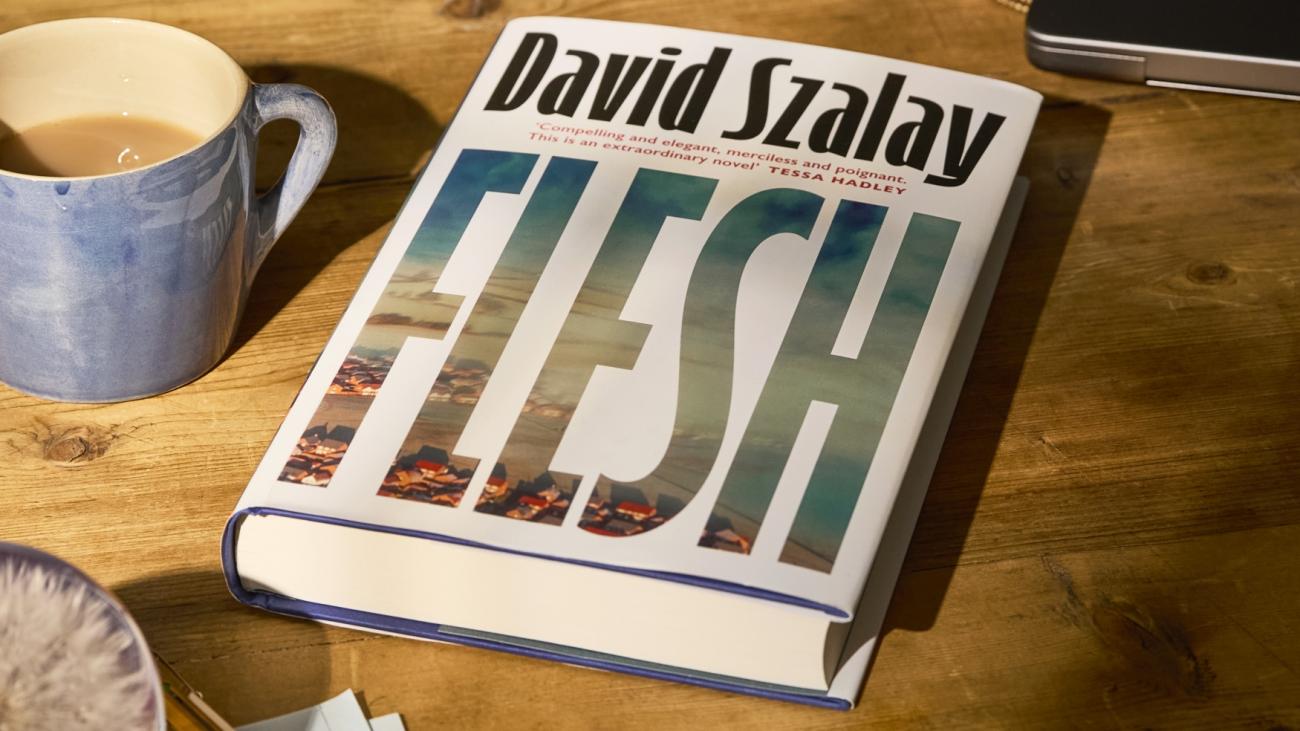
6. Flesh by David Szalay ← 2025 BOOKER PRIZE WINNER
The premise: A man navigates middle age, examining his body, his sexuality, his relationships, his place in the world. The novel is an unflinching look at masculinity, desire, and the gap between how we see ourselves and how others see us.
The book: Flesh won the prize, and it deserves it. This is a novel about a familiar character—middle-aged man grappling with aging and relevance—but Szalay writes about it with a clarity and honesty that's rare. He doesn't condescend to his protagonist and he doesn't excuse him either. The result is a character who's completely real: flawed, self-aware, self-deluding, trying.
The reading experience: Sharp, intelligent, and surprisingly funny. Szalay has a keen eye for absurdity without being mean about it. The novel moves quickly. There's intellectual engagement alongside genuine emotional stakes.
The judges loved: The mastery of voice. The way Szalay writes about masculinity without defensiveness or condemnation. The honesty.
Best for this mood: If you want intelligent literary fiction about contemporary life. If character studies interest you more than plot. If you're interested in questions about identity and aging.
Should you read it? Yes. This is the book on the list that feels most like a "complete" novel. It has depth and intelligence and humor. It's not as immediately pleasurable as The Loneliness of Sonia and Sunny, but it's probably the most well-constructed book here.
Which Booker Book Is Right For You?
If you want comfort and connection: The Loneliness of Sonia and Sunny
If you want intellectual challenge and strangeness: Audition
If you want a clever, playful literary novel: The Rest of Our Lives
If you want to be completely absorbed in another world: The Land in Winter
If you want a character study about contemporary life: Flesh
If you want ambition and scope: Flashlight
The Bottom Line
The 2025 Booker Prize shortlist is genuinely excellent. These books earned their place through sheer literary merit. But they're also six completely different reading experiences.
The prize will go to one of these books. But the right book for you isn't determined by a prize. It's determined by your reading mood, your emotional bandwidth, and what you actually need from a book right now.
Read the descriptions. Pick the one that calls to you. Then trust your instinct. The best book is always the one you're ready to read.